Art, Installations and Performances
Explore a better internet through the power of art! Discover our entire art and performance programme in which we expose the problems of big tech and visualise solutions for the future.
Explore a better internet through the power of art! Discover our entire art and performance programme in which we expose the problems of big tech and visualise solutions for the future.
By Julia Janssen
Can ChatGPT lie? Are conversations being influenced? Does OpenAI strike deals and steer agenda-driven answers? Will ChatGPT respond in the form of advertisements?
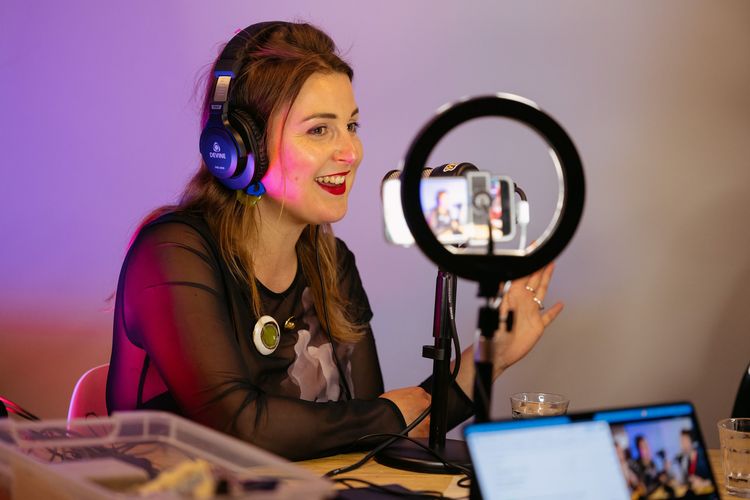
In Chadding, Julia Janssen challenges ChatGPT to reveal its own understanding of how AI influences reality and how OpenAI plans to maintain control over it. She exposes a future in which it becomes impossible to distinguish between a generated answer and a sponsored one, and pushes back against the 'inevitable' development of generative AI.
Algorithms relentlessly shape our lives: AI-generated content floods the internet, AI agents infiltrate our existence, and generative AI bots occupy every pixel of digital space. They solve tasks, rewrite texts, curate entertainment, purchase products, summarise news, and synchronise information. It feels effortless, simple, and comfortable. But at what cost? Frictionlessness comes with obedience, to the machine, to the industry, and to our own predictability.
Julia Janssen is a multiple-award-winning artist, researcher, and human rights advocate, known for her thought-provoking installations that take people behind the surface of apps and platforms. She is ambassador for the Data Protection Foundation in class action lawsuits against X, Adobe, and Amazon, suing for mass surveillance, profiling, and the illegal processing of personal data.
By Ginevra Petrozzi
What's the weather like tomorrow? Still.
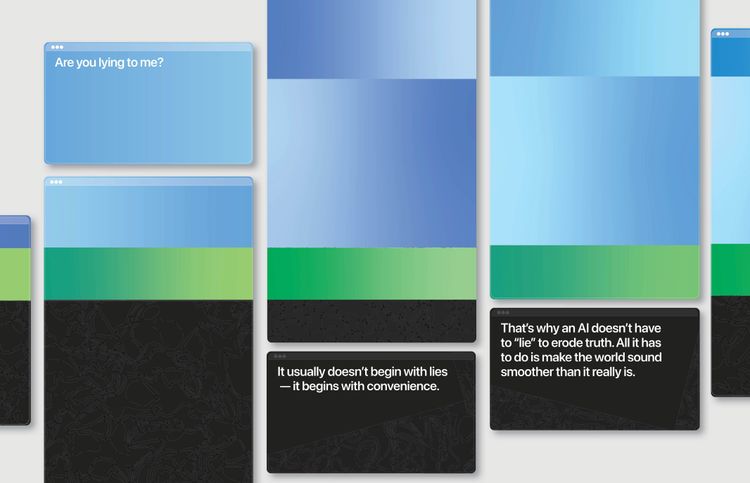
Prodigies is a proposal for an alternative consultation device for AI predictions. One that embodies illegibility, multiplicity, and an open future. The name refers to the Roman concept of 'prodigies': unusual weather events or strange animal births interpreted as messages from the divine. The work consists of a digital screen transforming real-life weather data from Amsterdam into ambiguous words, superimposed by an automated curtain that opens and closes at random times throughout the day, based on confidence in the prediction. Users are thereby forced to reclaim responsibility over the predictions they receive, and to actively engage with interpretation in order to find an answer to their questions.
AI and algorithmic systems attempt to generate answers about the future based on data gathered in the past, but the future is intrinsically unpredictable, and therefore any prediction will be an uncertain one.
Ginevra Petrozzi is an artist and interdisciplinary designer based in the Netherlands, whose work expands the notion of magical thinking in the context of modern predictive systems such as AI, machine learning, and algorithmic processes. Currently exploring mysticism and the occult within contemporary techno-politics, she has taken on the role of the 'digital witch' — reclaiming the archetypal figure of the sorceress as both healer and political rebel. Her work has been exhibited internationally, including at the National Gallery of Modern and Contemporary Art in Rome,
By Irakli Sabekia
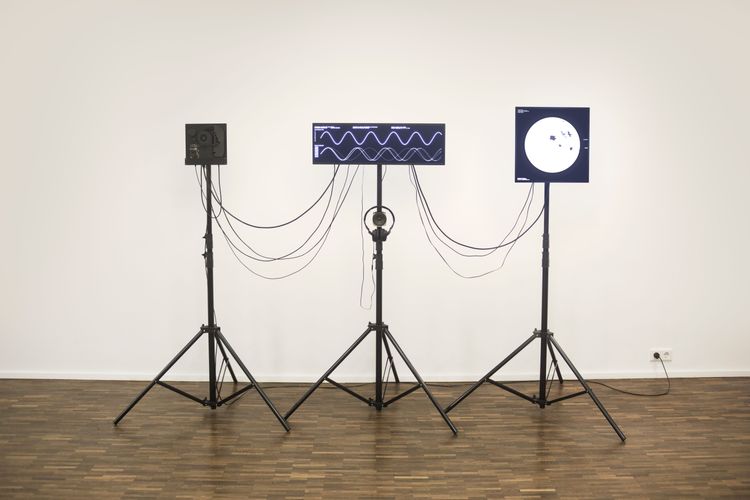
The speed of an internet connection between two points is not solely determined by physical distance. It is shaped by the quality of the infrastructure along the signal's path. The patterns of connectivity that emerge offer insight into the complex power dynamics that steer the development of the global network.
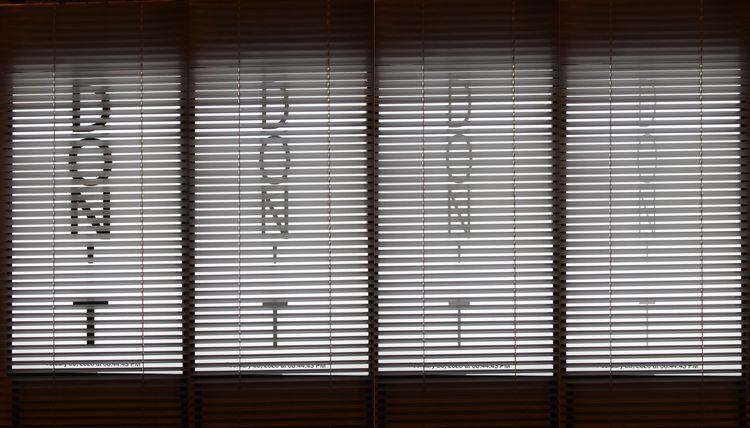
Network Proximity Atlas is a multimedia installation that examines this property of the internet. The work measures connectivity with every country and analyses the collected data across two parts. In the first, each connection is examined and rendered sonically: the tone representing the returning signal is altered according to the latency of the connection. In the second, the recorded parameters are used to generate a map of the world based on connectivity, one in which countries are rearranged according to the speed and quality of their connection.
Together, the two parts reveal an internet that is far from equal: a network whose shape is determined not by geography, but by power.
Irakli Sabekia is a Georgian designer and artistic researcher based in Amsterdam. At the intersection of design, art, and philosophy, he explores the frictions that arise between the human and the system. In his installations, experience is used as a tool to enter a dialogue with the viewer, creating a meaningful encounter that enables a layered insight into the issues he addresses.
By Luna Maurer
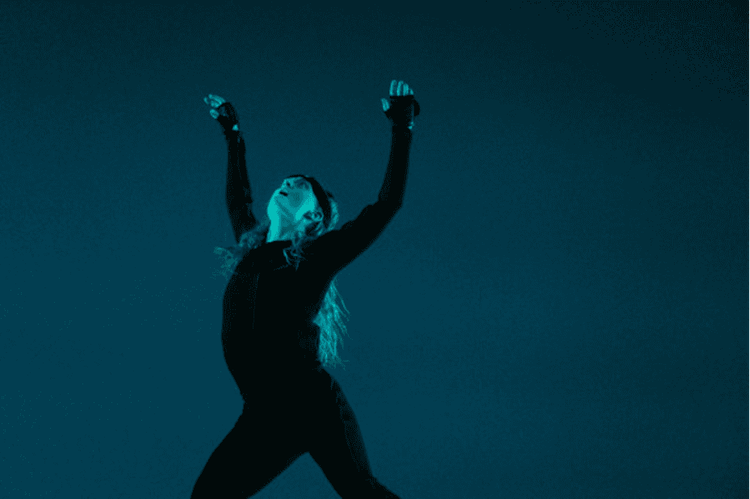
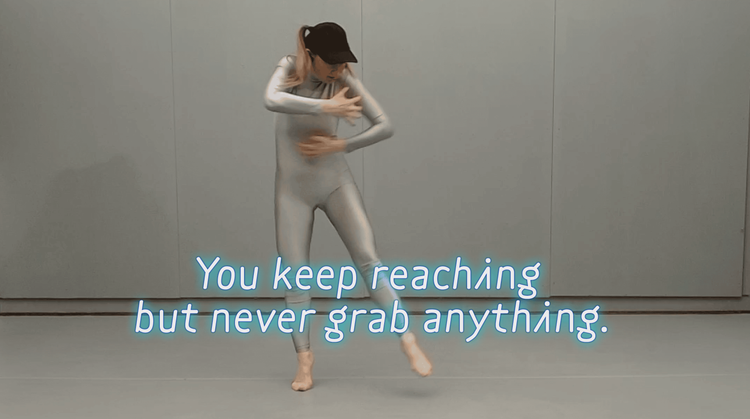
In Dance Out of Pattern, Luna Maurer uses an AI system she developed herself to explore what happens when she has an AI companion as a dance partner. It is not a digital twin or virtual dancer, but an AI system that interprets her movements, responds to her and challenges her using language, facilitating a mutual dialogue. Maurer responds live to the AI’s prompts. The audience can read along and thus interpret the prompts for themselves simultaneously.
Through this work, Maurer explores whether physical expression can be a way to create new stories together with a non-human entity: what emerges when a human dancer and a machine actually ‘engage in conversation’ with one another through movement?
The exposition exists out of multiple screens showcasing her work.
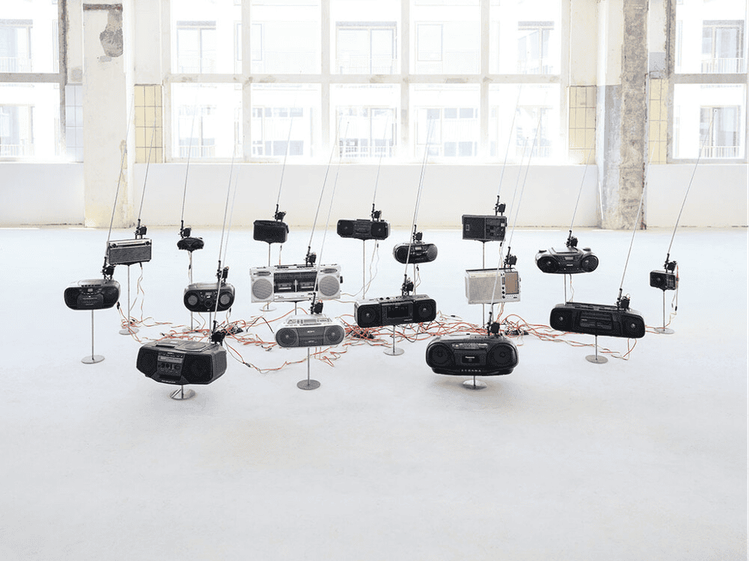
Hyperscalers, algorithms, content farming, cloud computing – we know we want to change the digital world, but how?
The artists in Short Circuit break technology down and build new ideas from the digital debris. They propose alternatives and demonstrate how fair technology might be constructed. Delve into the physical impact of data centres and the cloud, explore privacy protection as an ancient curse, and discover how gamer culture and PC modding can change the way you view your relationship with hardware.
Featuring work by Ginevra Petrozzi, Gion Berlijn, Irakli Sabekia, Julia Janssen, Kai-Hsiang Wen, Nestor Siré and Papertrail.
A collaboration between ICK Dans Amsterdam and Waag Futurelab
What happens when a dancer is challenged by a digital counterforce that recognises, reframes, and translates movement into an audible dance partner? Can we expect a co-created performance between a human performer and a digital learning system? And if so, what are the creative and ethical conditions that shape it?
In collaboration between ICK Dans Amsterdam and Waag Futurelab, this workshop, performance and discussion explores embodied creativity at the intersections of human movement and AI.
Together, we examine what it means for a body to dance with — and against — an algorithm, and what emerges when dance meets machine interpretation.
The session will start with a Double Skin/Double Mind (DS/DM) movement workshop, the dance method developed by artistic directors of ICK Dans Amsterdam Emio Greco and Pieter C. Scholten.
Participants will then experience excerpts from Prologo d’Entrata , the opening scene of the dance opera WE, the LUST (2024) where the dancing body constantly reshapes a musical score by means of an AI Toolbox that analyzes and transforms movement into sound.
The performance will be followed by a discussion with Hiroki Nunogaki(ICK), Suzan Tunca(ICK), Francesco Cutillo, (ICK), Ola Bonati (Waag) and the participants.
This session is part of the EU research project HAMLET, which seeks to understand the conditions under which the cultural and creative industries can be empowered through AI and collaboration.